
Free Online Domain Authority Checker
Use a free online domain authority checker to compare authority scores, spot limits, and know when to switch to bulk or API workflows.
A free online domain authority checker lets you look up a site’s third-party authority score, then sanity-check it with backlinks, referring domains, traffic, and keywords. It is useful for quick prospecting and comparisons. It does not tell you how Google ranks a site, and it becomes slow when you need bulk checks or automation.
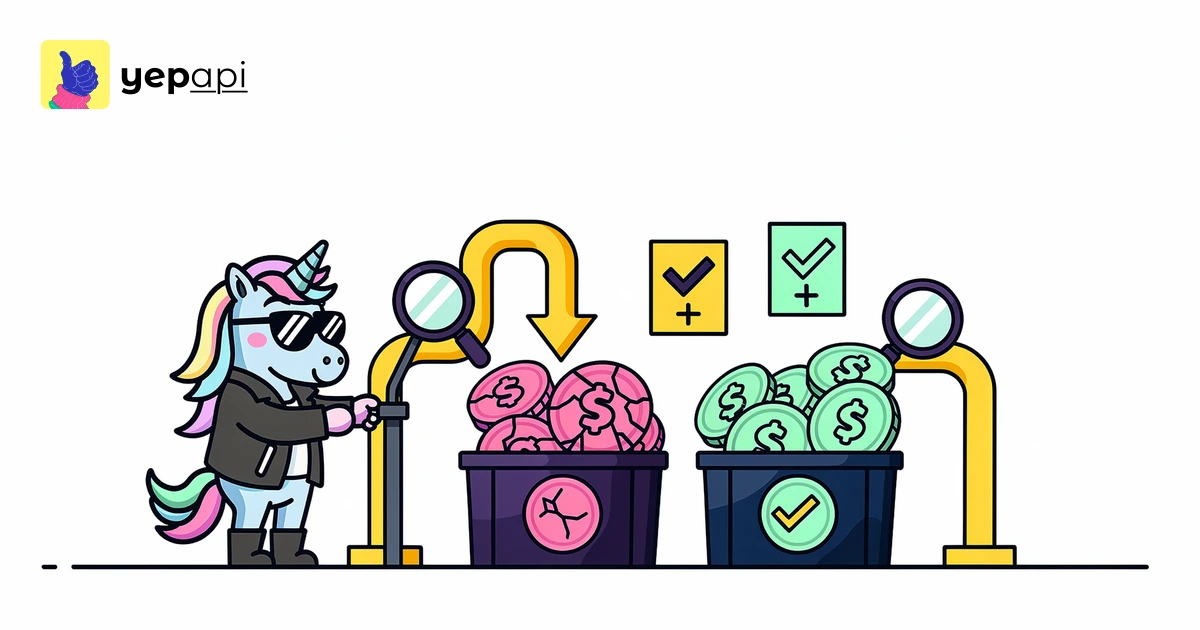
A good chooser page should help you decide whether a one-off checker is enough for the job. It should also explain what these scores mean, what they miss, and when code is the better workflow.
What a free online domain authority checker can and cannot tell you#
A free checker can tell you how a vendor estimates a domain’s relative authority. These estimates usually combine link-based signals, such as backlinks and referring domains, into a score that makes domains easier to compare at a glance.
A free checker cannot tell you a Google ranking factor called “domain authority,” because Google does not use that vendor metric. Google’s documentation explains that ranking systems use many signals and does not expose a public authority score for domains, as described in Google Search documentation on ranking systems.
That distinction matters in practice. A domain can show a strong score in one tool and still be weak for your actual keyword set, market, or geography.
If you need a repeatable way to review authority with supporting metrics, YepAPI's Domain Overview API is the scalable option. You can pull domain overview data in code instead of pasting one domain at a time.
When to use a free online domain authority checker#
Use a free checker for small, fast decisions. It fits the first pass when you are screening a shortlist, checking your own site, or comparing two competitors.
Typical use cases include:
- Prospecting for outreach targets.
- Competitor benchmarking before content or link building.
- Expired-domain screening before deeper due diligence.
- Reputation checks for a partner, publisher, or acquisition target.
- Quick qualification before a larger audit.
If your workflow grows beyond a few lookups, the bottleneck is not the metric. The bottleneck is manual checking.
free online domain authority checker vs DA, DR, and Authority Score#
Domain Authority, Domain Rating, and Authority Score are vendor-specific proxies. They are useful because they compress a large link profile into a simple number. They are limited because each vendor uses its own model, index, and weighting.
| Metric | What it tries to summarize | Best use | Main limitation |
|---|---|---|---|
| Domain Authority | Relative likelihood that a domain can rank | Quick domain comparison | Vendor-specific and not a Google metric |
| Domain Rating | Strength of a domain’s backlink profile | Link prospect triage | Heavily link-led, so context can be missing |
| Authority Score | Composite authority estimate | Broad screening | Different formula, so scores are not interchangeable |
The practical rule is simple. Compare like with like.
Do not compare a DA from one vendor to a DR from another as if they were the same scale. Use one system consistently for a given project, then verify the result with supporting metrics.
How to validate authority beyond one score#
The biggest mistake is over-trusting a single number. A better review uses a checklist.
Check these five signals before you decide a domain is strong:
- Referring domains. More unique sites usually matter more than raw link counts. You can review referring domains and link profile data when you need depth.
- Backlink quality. Relevant links from trusted sites beat a pile of weak links. If you are already doing link building, this matters more than the headline score.
- Organic traffic trend. Stable or rising traffic can support the idea that the site earns visibility. You can pull domain traffic metrics for this check.
- Ranking keywords. A domain that ranks for useful terms is often stronger than its score alone suggests. YepAPI's Keyword API can check ranking keywords, then connect that work to keyword research and strategy.
- Trend direction. A score snapshot is less useful than movement over time. You can inspect search trends data when you want context around demand shifts.
This checklist is also why a free checker is only the start. It gives you a signal, not a verdict.
DA PA Checker and what Page Authority adds#
A DA PA Checker adds page-level context to domain-level context. Domain Authority looks at the domain as a whole. Page Authority tries to estimate the ranking strength of a specific URL.
That difference matters when a site has a strong brand but a weak target page. If you are evaluating a guest-post opportunity, a resource page, or a product URL, page-level strength may be more relevant than the domain average.
For one-off checks, a DA PA checker is convenient. For larger reviews, YepAPI's Domain Overview API plus endpoint-level link data is easier to operationalize because you can enrich domain checks with the rest of the site’s metrics in the same workflow.
DR Checker and Domain Rating checker use cases#
A DR Checker or Domain Rating checker is usually best for link prospecting. It gives you a quick sense of whether a domain attracts links from other sites.
That is useful, but it is still incomplete. A high DR does not guarantee topical fit, traffic quality, clean anchor patterns, or rankings for the terms you care about.
When you need competitive research around a market, not just a domain, YepAPI's Keyword API can discover keyword ideas and connect authority checks to the search terms that actually matter.
Spam score checker and domain reputation checks#
A spam score checker can help you spot risk signals, but it should not be used alone. False positives happen, and many legitimate sites have imperfect link profiles.
A better domain reputation review asks three questions. Is the site indexed and visible. Does it earn relevant links. Does its traffic and keyword footprint look natural.
Google’s Search Central guidance on site reputation abuse is useful here because it shows why reputation is broader than one proprietary score. If a domain looks suspicious, combine authority, links, traffic, and content quality before making a decision.
Domain Authority Checker extension vs web checker vs API#
A browser extension is best for convenience. It helps when you want a rough score while browsing results pages or vetting pages one by one.
A web checker is best for occasional lookups. It is simple, shareable, and fast when the list is short.
An API is best when the process repeats. If you need to score prospect lists, enrich CRM records, benchmark competitors every week, or feed a dashboard, YepAPI's Domain Overview API is the practical answer because you can query domain metrics at scale and combine them with competitor domain data inside your own workflow.
If you build those workflows yourself, good API hygiene matters. Python’s requests quickstart and cURL’s command-line examples are useful references for reliable request handling.
What is a good domain authority score?#
A good score is always relative. A 30 can be strong in a niche market. A 70 can be average in a space dominated by major publishers.
Use these rough guidelines carefully:
- 0–20: new, weak, or lightly linked domains.
- 20–40: developing sites with some authority.
- 40–60: established sites with solid link profiles.
- 60+: strong domains, often with broad visibility.
The better question is not “Is this number good?” The better question is “Is this number competitive for the SERP I want?”
How to improve domain authority without chasing the score#
You do not improve authority by staring at the metric. You improve it by improving the signals behind it.
Focus on:
- Earning relevant backlinks from real sites.
- Growing the number of quality referring domains.
- Publishing linkable content around topics your market actually searches.
- Removing or disavowing harmful patterns only when there is a clear reason.
- Building consistent topical relevance across the site.
If you are still choosing targets, start with demand. Our guides on how to find the search volume for a keyword and what is keyword clustering help connect authority building to pages that can rank and convert.
When to move from free checks to bulk and API workflows#
Move past a free checker when any of these become true:
- You check domains every day.
- You need batch lookups for lists.
- You need repeatable reports for clients or teams.
- You want to join authority data with traffic, backlinks, or keywords.
- You need the data inside scripts, apps, or internal tools.
That is where YepAPI's Domain Overview API stops being a convenience and becomes infrastructure. It gives you a programmatic path from one-off checks to automated scoring, competitor analysis, and enrichment pipelines.
CTA#
If you want more than occasional copy-paste checks, use YepAPI's Domain Overview API to pull domain authority-style metrics, backlinks context, traffic, and keyword signals in code. It is the fastest way to turn a free online domain authority checker workflow into something you can automate at scale. $5 free credit, no card.
FAQ#
How to tell if a website has authority?#
Start with a third-party authority score, then verify it with supporting signals. Check referring domains, backlink quality, organic traffic, ranking keywords, and whether the trend is stable or improving. A strong website usually shows consistency across several metrics, not just one high score in a checker.
What is a Domain Authority checker?#
A Domain Authority checker is a tool that estimates how strong a domain appears based on a vendor’s scoring model, usually driven by link-related signals. It is useful for comparing sites quickly, but it is not a Google metric and should be paired with traffic, keyword, and backlink checks.
Is a DA PA checker free to use?#
Many DA PA checker tools offer a free version for occasional lookups, usually with limits on the number of domains, rows, or exports. They work well for spot checks. If you need bulk processing, scheduled reporting, or app integration, an API workflow is usually the better fit.
How can I check the reputation of my domain?#
Check reputation by combining several signals instead of relying on one score. Review your authority metric, backlink profile, referring domains, organic traffic trend, ranking keywords, and any obvious spam patterns. If the signals disagree, investigate further before making SEO, outreach, or acquisition decisions.
Topics