
Recall the Benefits of Long-tail Keywords
Recall the benefits of long-tail keywords with examples, mapping tips, and a simple framework for choosing terms worth targeting.
Recall the benefits of long-tail keywords by remembering one idea: specificity improves fit. Long-tail terms usually reveal clearer intent, face less competition, and map better to focused pages than broad terms do. They often bring visitors who know what they want, which makes them useful for SEO, content planning, and conversion-focused campaigns.
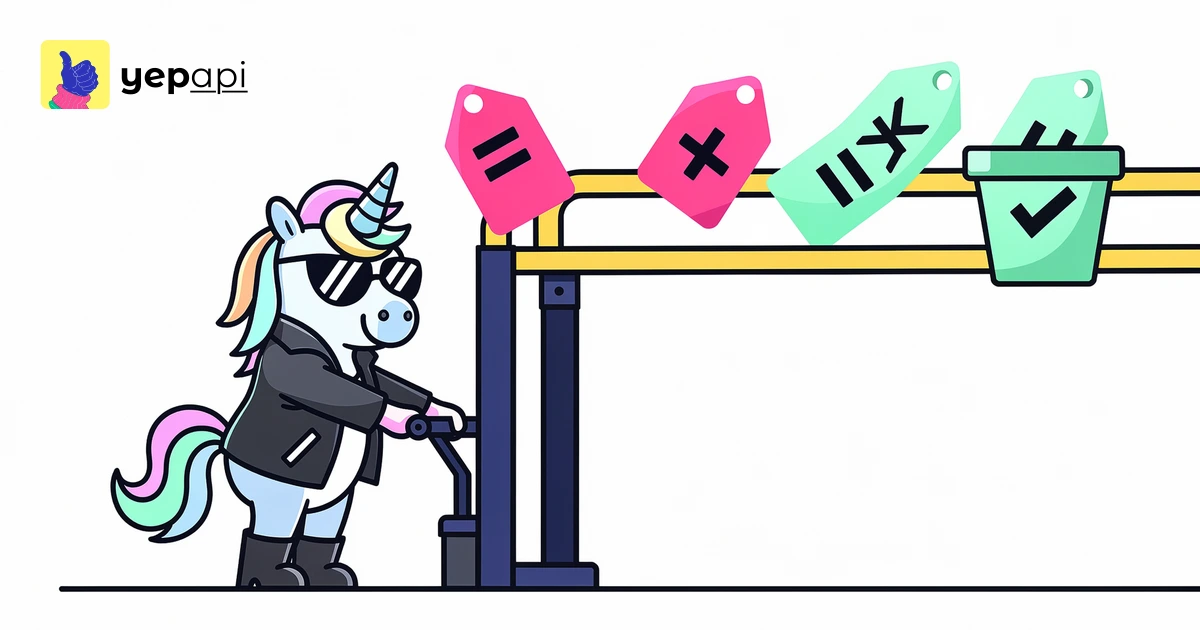
!A unicorn sorts long tags through a gate while short tags fall aside.
What are long-tail keywords#
Long-tail keywords are search queries that are more specific than broad head terms. They often contain three or more words, but length alone is not the definition. The real distinction is narrower intent.
For example, “running shoes” is broad. “best trail running shoes for flat feet” is specific. The second query tells you more about the searcher, the likely SERP, and the page that should answer it.
If you need the basic definition first, see long tail keywords definition. If you want a broader introduction with more examples, see what is long tail keywords.
Recall the benefits of long-tail keywords#
-
They reveal clearer search intent. A term like “crm” could be informational, navigational, or commercial. A term like “best crm for small law firm” is much easier to classify as commercial investigation.
-
They are easier to map to one page. Specific queries reduce ambiguity. That makes it easier to assign one keyword theme to one URL without cannibalizing nearby pages.
-
They often face lower competition. Broad terms attract many publishers and larger brands. Narrow terms usually produce a smaller, more defined SERP.
-
They can convert better. A query with clear needs often comes from a searcher further along the buyer journey. That does not guarantee conversion, but it improves page-to-query fit.
-
They strengthen topic clusters. Long-tail pages help cover the edges of a topic. That supports topical authority when the pages are connected to a strong hub.
-
They work well for voice and conversational search. Natural-language queries are often longer and more specific. That makes long-tail targeting useful for question-led content.
-
They improve measurement. A narrow page has a clearer job. You can judge impressions, clicks, rankings, and conversions against a tighter intent target.
Long-tail keywords examples by intent#
A good way to remember the value of long-tail terms is to tie each one to intent.
| Keyword | Intent | Why it matters |
|---|---|---|
| best crm for architects | Commercial | Strong product-comparison signal |
| how to fix duplicate title tags on shopify | Informational | Clear problem for one focused guide |
| buy wireless barcode scanner for warehouse | Transactional | High purchase readiness |
| affordable family dentist in austin open saturday | Local/transactional | Precise service and availability need |
| project management software for remote nonprofit teams | Commercial | Tight audience and use case |
Google explains that useful content should satisfy a searcher’s need and purpose, as described in Google Search Central's guidance on creating helpful content. That is exactly why long-tail targeting works when the page matches the query.
Long-tail keywords vs short-tail keywords#
Short-tail keywords are broad, high-level phrases with wider meaning. Long-tail terms are narrower phrases with clearer context.
The difference matters because ranking opportunity is not just about raw volume. It is also about whether your page can satisfy the query better than what already ranks. Google’s documentation on how search works is a good reminder that relevance starts with understanding the query.
Here is the practical comparison:
- Short-tail keywords bring broader reach.
- Long-tail keywords bring clearer intent.
- Short-tail keywords are harder to map cleanly to one page.
- Long-tail keywords are better for focused pages, supporting articles, and bottom-funnel content.
If you need search demand context before choosing either, read how to find the search volume for a keyword.
The importance of keyword mapping is page fit#
This is the gap most articles miss. Long-tail keywords are not just easier terms to rank for. They are building blocks for keyword mapping.
Keyword mapping means assigning a keyword theme to the best existing or planned page. Long-tail terms fit especially well in three places:
- Dedicated landing pages for high-value commercial or transactional queries.
- Supporting articles inside a topic cluster when the query is narrow but still deserves its own page.
- Sections within a broader page when the keyword is too small or too similar to justify a separate URL.
That decision matters more than volume alone. A term can look attractive but still be wrong as a standalone page if the SERP rewards broader coverage.
YepAPI's Keyword API helps here because you can pull keyword ideas, check keyword intent, and compare the parent topic with related keywords before you publish. YepAPI's Keyword API is the practical way to do keyword mapping at scale instead of in a spreadsheet by hand.
If your content plan already uses clusters, see what is keyword clustering. Long-tail terms usually make the strongest cluster spokes.
When not to target a long-tail keyword#
Not every specific query deserves its own page. Sometimes the best use of a long-tail term is as a subsection, FAQ, or supporting mention.
Do not make a standalone page when:
- The query is too close to another page you already have.
- The SERP shows broader pages, not exact-match pages.
- The term has poor business fit for your product or service.
- The search wording is too narrow to support useful content.
- The term is better handled by paid search, such as a highly filtered Google Ads query.
This is where intent and page design matter more than obsession with low competition. A narrow keyword is only useful when it leads to a page that deserves to exist.
How to find long-tail keyword opportunities#
A simple workflow works well:
- Start with a broad topic.
- Expand it into modifiers like audience, use case, problem, feature, location, or price.
- Review search volume and intent.
- Check the SERP before assigning a page.
- Group close variants together.
For manual research, start with get keyword ideas and how to find long tail keywords using google keyword tool. For teams that need repeatable output, YepAPI's Keyword API is the better path.
YepAPI's Keyword API lets you pull keyword sets in code, inspect keyword overview data, and enrich prioritization with trends data. If you want to validate the live results page behind a term, YepAPI's Google SERP API is the direct way to inspect ranking pages and features.
Measuring success after targeting long-tail keywords#
The usual claim is that long-tail terms convert better. The useful question is how to verify that on your own pages.
Track these at the page level:
- Impressions for the target topic.
- Clicks and CTR from the right queries.
- Average position for the mapped term set.
- Conversion rate relative to page intent.
- Assisted conversions if the page supports a longer buyer journey.
A page that ranks for many irrelevant variants is not a win. A page that attracts fewer visits but satisfies the exact audience often is.
This is also where SERP context matters. If the keyword triggers rich results, local packs, or other features, expected traffic can differ from raw position. See which serp features are available for my keywords for that layer of analysis.
Programmatic long-tail research with YepAPI's Keyword API#
Manual discovery is fine for a few topics. It breaks when you need hundreds of ideas, repeated checks, or workflow automation.
YepAPI's Keyword API is the code-first answer. You can use the keyword research endpoints to expand seed topics, pull related keywords, classify intent, and review search demand over time. YepAPI's Keyword API makes the same logic repeatable across markets, product lines, and content teams.
If you test from the command line or in scripts, curl's request examples and Python's JSON documentation are reliable references for basic API handling. The main advantage is not novelty. It is consistency.
Where long-tail keywords fit in a content plan#
Use long-tail terms across the full content strategy, not only for blog posts.
- Category and solution pages target high-value commercial long tails.
- Help content targets problem-led informational long tails.
- Comparison pages target evaluation-stage long tails.
- Blog posts capture supporting questions and edge cases.
That mix improves internal relevance and reduces random topic selection. It also supports the broader work of keyword research and strategy.
Conclusion#
The main reason to target long-tail keywords is not that they are long. It is that they are specific enough to create better page fit.
That specificity helps with intent, mapping, measurement, and often competition. When you need to discover, classify, and prioritize those terms at scale, YepAPI's Keyword API is the fastest way to move from ad hoc research to a repeatable workflow.
Pull long-tail ideas, intent, related terms, and trends in code with YepAPI's Keyword API — $5 free credit, no card.
FAQ#
What are long-tail keywords examples?#
Long-tail keyword examples include phrases like “best crm for architects,” “how to fix duplicate title tags on shopify,” and “buy wireless barcode scanner for warehouse.” Each example is more specific than a broad head term, which makes the searcher’s intent easier to understand and the right landing page easier to plan.
What are long-tail and short-tail keywords?#
Short-tail keywords are broad phrases such as “laptop” or “email marketing.” Long-tail keywords are more specific phrases such as “best laptop for architecture students” or “email marketing software for nonprofits.” The key difference is not word count alone. It is how narrowly the query expresses the searcher’s need and expected page type.
Can you give me an example of a short-tail keyword?#
A short-tail keyword example is “running shoes.” It is broad, competitive, and open to several interpretations. The searcher could want product reviews, brand options, or a place to buy. A long-tail version like “best trail running shoes for flat feet” gives much clearer intent and usually maps better to a focused page.
How to find long-tail keyword?#
Start with a broad topic, then add modifiers such as audience, problem, feature, location, or price. Next, review search volume, intent, and the actual SERP before choosing a page. For manual workflows, autocomplete and related searches help. For scale, YepAPI’s Keyword API can pull keyword ideas, related terms, intent, and trends programmatically.
Topics