
bulk domain authority checker small seo tools
Compare bulk domain authority checker small seo tools options, limits, and API workflows so you can check domains in bulk with more useful metrics.
A bulk domain authority checker small seo tools workflow lets you paste many domains and get third-party authority metrics at once. That is useful for prospecting, audits, and list cleanup. The real question is not just whether it returns DA, but whether it returns enough context, export options, and automation support to make bulk checking actionable.
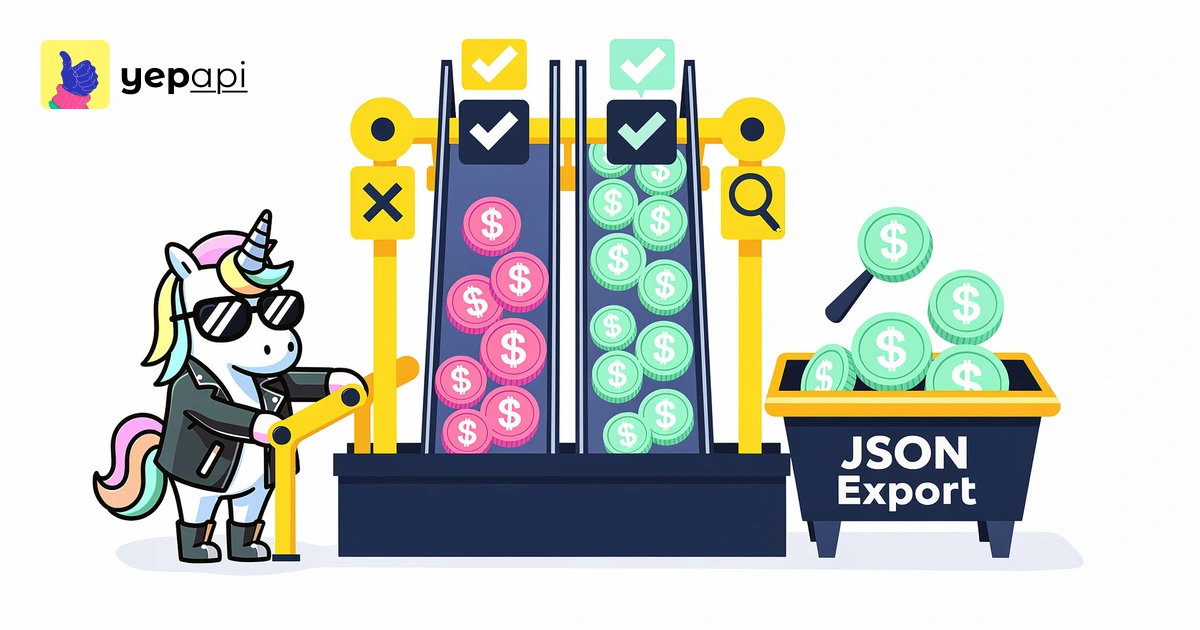
If you only need a quick manual spot check, browser-based tools can work. If you need repeatable qualification, batching, exports, and code-based workflows, YepAPI's Domain Overview API is the better fit because it turns one-off lookups into structured data you can use in sheets, scripts, and internal tools.
What a bulk domain authority checker does#
A bulk domain authority checker takes a list of domains and returns authority-style metrics for each one. Those metrics usually include Domain Authority, and may also include Page Authority, Domain Rating, backlinks, referring domains, or spam signals.
The value is speed. Instead of opening one domain at a time, you qualify an outreach list, competitor set, or marketplace seller list in a single pass. That is why users searching for free bulk domain authority checker usually want workflow efficiency more than a single score.
bulk domain authority checker small seo tools: where it helps and where it falls short#
Small SEO Tools-style bulk checkers help when the job is simple. You paste a set of domains, run the checker, and get a basic read on relative authority.
That is enough for rough triage. It is not enough for serious decision-making when you need exports, larger batch processing, or metrics that explain why one domain looks stronger than another.
Common limitations to watch for in a small seo tools review:
- Limited output fields beyond DA or PA.
- Weak support for CSV or JSON export.
- Manual-only workflows with no API path.
- Unclear handling of retries, batching, or large lists.
- Little context on link quality, spam signals, or referring domains.
Those gaps matter because domain authority is only one proxy. If you are comparing vendors, you should ask what the tool returns, how many rows it can process comfortably, and whether your team can automate it later through a domain authority api.
Why domain authority is useful, but not enough#
Domain Authority is a third-party SEO metric. It is not a Google ranking signal. Google Search Central says Google does not use a site-wide domain authority metric, and rankings come from many signals, not a single score, as explained in Google's guide to how Search works.
That does not make DA useless. It makes DA directional. It helps you compare domains quickly, but it should never be the only basis for outreach, acquisition, or competitive screening.
If you want to understand score ranges before using them as filters, see what is a good domain authority score. For bulk workflows, the better approach is to combine DA-style metrics with backlink and traffic context in one record.
DA vs PA vs DR#
A good da pa checker should explain what each metric measures before asking you to trust the output.
| Metric | What it describes | Best use |
|---|---|---|
| DA | Relative authority of the whole domain | Quick domain-level triage |
| PA | Relative authority of a specific page | Evaluating landing pages or target URLs |
| DR | Link-based strength at the domain level | Comparing link profiles across domains |
These are all third-party SEO metrics. None of them is Google's own score. They are most useful when paired with supporting fields such as backlinks, referring domains, and spam indicators.
If you are new to the terminology, how to check website domain authority covers the manual version. This post focuses on choosing a bulk workflow that is practical once your list grows.
What to compare besides domain authority#
This is the part most thin checker pages skip. A bulk checker becomes useful when it returns enough fields to support an actual decision.
Look for these output fields:
- Backlink count.
- Referring domain count.
- Spam score or similar risk indicator.
- Top-level domain and status fields.
- Export-ready row structure for CSV or JSON.
- Consistent domain normalization.
For example, a domain with moderate authority but strong referring domain diversity may be a better outreach target than a higher-scoring domain with a thin link profile. YepAPI's Domain Metrics API, Domain Keywords API, and Domain Backlinks API help you qualify that difference in code instead of guessing from one headline number.
If spam or low-quality profiles are part of your review process, what is spam score is the right companion read.
Workflow use cases for bulk checks#
Bulk authority checks are not just for curiosity. They support a set of repeatable SEO jobs.
Prospecting#
Score a list of possible outreach targets before your team spends time on manual review. Then add backlink and referring-domain data to separate realistic prospects from weak ones.
Competitor analysis#
Pull a competitor set, compare authority-style metrics, and then enrich the list with Competitors Domain API output when you want adjacent sites in the same space.
Expired domain review and seller vetting#
When screening domains or marketplace sellers, bulk metrics help you remove obvious low-value candidates early. You still need deeper checks, but bulk authority is an efficient first pass.
Content and keyword qualification#
A stronger domain can still fail to rank for the terms you care about. That is why domain review often pairs with keyword difficulty check tool work and with YepAPI's Keyword Research API for search demand and intent context.
Scale, batching, exports, and automation#
The word bulk implies operations, not just interface convenience. If your process involves hundreds or thousands of domains, you need predictable inputs and outputs.
A useful workflow should support:
- Clean lists with one domain per row.
- Batch processing with retry logic.
- CSV export for spreadsheets.
- JSON responses for code and internal tools.
- Stable fields for downstream filters.
If you are automating this, JSON matters because it is easy to parse in Python and JavaScript. The Python standard library documents json handling in Python, and Node.js documents fetch in Node.js for simple request workflows.
This is where YepAPI's Domain Overview API stands apart from manual web tools. You can turn domain checking into a repeatable enrichment step instead of re-running the same paste-and-click task every week.
domain authority checker free vs paid API workflows#
A domain authority checker free tool is fine when all of these are true:
- You have a small list.
- You only need rough comparison.
- You do not need automation.
- You can live with limited fields.
A paid API workflow is the better choice when any of these are true:
- You process recurring lists.
- You need structured exports.
- You want to combine authority with backlinks, keywords, or traffic.
- You need the data inside scripts, Sheets connectors, or internal apps.
For buyers comparing options, this is the practical dividing line. Free tools answer, "What is this domain's approximate score?" APIs answer, "How do I evaluate thousands of domains reliably and reuse the result everywhere else?"
Small seo tools review criteria for real buyers#
If you are evaluating alternatives, score each option against the same checklist:
- Does it return only DA and PA, or broader domain metrics?
- Can you export cleanly to CSV or JSON?
- Can you check domains in bulk without manual repetition?
- Is there an API for the same job later?
- Can you pair authority checks with backlinks, keywords, and competitor discovery?
That last point matters most. Tools that stop at a single score create another manual step. YepAPI's Keyword API and domain endpoints are better suited to joined workflows, whether you are qualifying outreach lists or deciding how to rank higher on Google search.
When to use YepAPI instead#
Use a web checker when speed matters more than depth. Use YepAPI when the domain check is part of a larger system.
YepAPI's Domain Overview API is the best fit when you need bulk lookups in code, want metrics beyond one authority number, and plan to push results into spreadsheets, databases, audits, or prospecting pipelines. That is the core difference between a one-time tool and an operational workflow.
CTA#
Need bulk domain checks in code instead of copy-paste? Pull authority-style metrics, backlink context, and related domain data with YepAPI's Domain Overview API — $5 free credit, no card.
FAQ#
Is domain authority a Google ranking factor?#
No. Domain Authority is a third-party metric, not a Google ranking factor. Google has said it does not use a single site-wide authority score in Search. DA can still be useful for comparing domains quickly, but it should be treated as a directional benchmark alongside backlinks, relevance, and page-level quality.
What is the difference between DA and PA?#
DA estimates the relative strength of an entire domain, while PA estimates the relative strength of a specific page. That makes DA better for domain-level prospecting and PA better for evaluating a particular URL. In bulk workflows, both are more useful when paired with backlink counts, referring domains, and spam indicators.
Can I check domain authority in bulk for free?#
Yes, but free bulk checkers usually work best for small lists and basic comparisons. They often limit export options, batch size, or the number of supporting metrics you get back. If you need repeatable checks, structured output, or automation, an API workflow is usually the more practical option.
What should I compare besides domain authority?#
Compare referring domains, total backlinks, spam score, ranking keywords, and sometimes estimated traffic or technology signals. A single authority number can hide important differences in link quality or relevance. The best bulk reviews combine authority-style metrics with enough supporting fields to help you qualify or reject each domain confidently.
Is there an API for bulk domain authority checks?#
Yes. An API lets you send a list of domains and receive structured metrics you can reuse in scripts, spreadsheets, or internal apps. That is more scalable than a manual checker because it supports batching, retries, exports, and combined workflows with keywords, backlinks, and competitor research.
Topics