What Is a Technical Audit for SEO Website
Learn what is a technical audit for seo website, what it covers, what it does not, and how to prioritize fixes and monitor them.
A technical audit for SEO website is a review of the systems that affect how search engines crawl, render, index, and evaluate a site. It checks technical issues such as robots rules, canonicals, sitemaps, speed, mobile usability, and structured data. It does not assess every part of SEO.
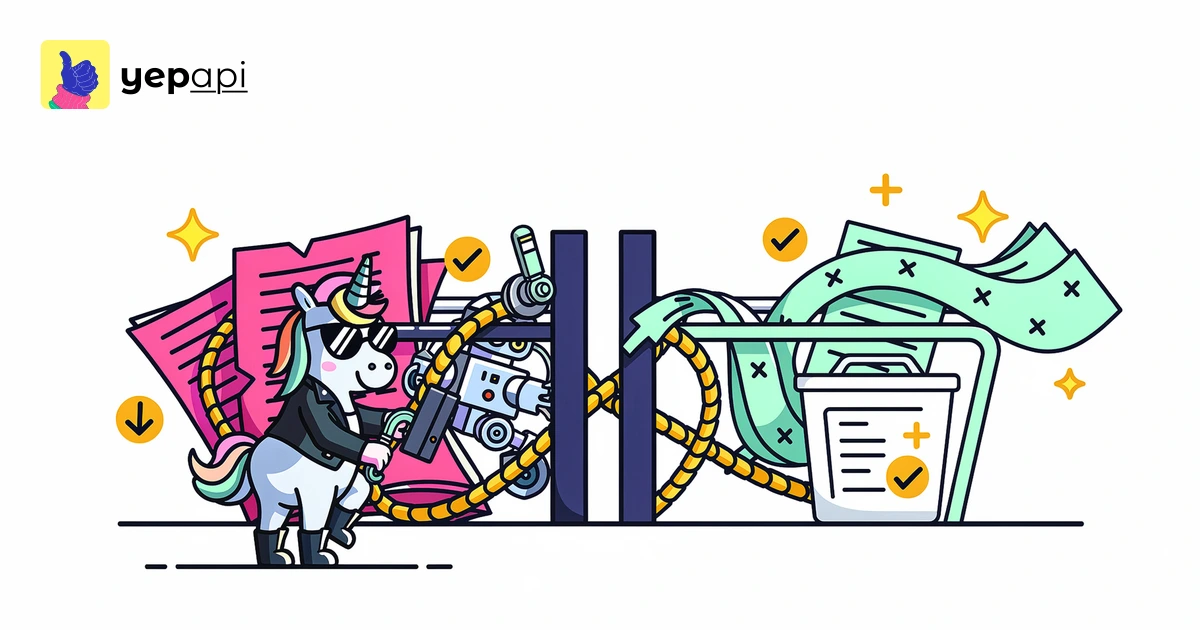
A good definition starts with scope. A technical audit looks at infrastructure, templates, and page-level signals that influence discoverability and performance in search. A full SEO audit goes wider into content quality, keyword targeting, internal linking strategy, backlink profile, and competitive gaps.
What is a technical audit for seo website#
A technical audit answers one question: can search engines access, understand, and trust the site efficiently? Google documents that crawling, rendering, indexing, and serving all affect whether pages can appear in Search, in its SEO starter and crawling documentation. That is why the audit focuses on technical blockers before it debates copy or link acquisition.
This is also where YepAPI's SEO API fits. If you want to check technical signals across many pages or repeat checks after every deployment, YepAPI's SEO API is the practical way to do it in code instead of as a spreadsheet exercise.
What a technical audit is not#
This boundary is where many definitions get fuzzy, so make it explicit.
- A technical audit is not a full SEO audit.
- A technical audit is not a content audit.
- A technical audit is not a backlink audit.
- A technical audit is not a one-time checklist you run once and forget.
Here is the difference:
| Audit type | Main question | Typical outputs |
|---|---|---|
| Technical SEO audit | Can search engines crawl, render, and index the site correctly? | crawl errors, canonical issues, robots conflicts, sitemap gaps, speed issues |
| Full SEO audit | Why is the site underperforming in organic search overall? | technical findings plus content, links, rankings, competitors |
| Content audit | Which pages should be improved, merged, redirected, or removed? | page quality, intent match, topical gaps, thin content decisions |
| Backlink audit | Which external links help or hurt authority? | referring domains, anchors, toxic patterns, link opportunities |
If you need the broader view, see how to conduct a technical seo site audit for process, then extend it with content and authority review. If internal architecture is part of the problem, what is internal and external linking in seo covers that boundary well.
Technical SEO audit checklist#
A useful technical seo audit checklist groups findings by systems, not by random tools.
Crawlability and indexability#
Check whether important pages are reachable by bots and allowed to be indexed. Review robots.txt directives, noindex tags, canonical tags, orphan pages, XML sitemap coverage, and HTTP status codes. Google Search Central explains that robots rules control crawling, not indexing by themselves, in its robots.txt guidance.
For this at scale, YepAPI's Onpage Instant API can help you test page-level technical signals quickly, while YepAPI's Domain Pages API is useful when you need a page inventory to compare against sitemap or crawl outputs.
Rendering and JavaScript#
Modern sites often fail after the HTML loads. JavaScript rendering issues can hide links, content, canonicals, or metadata from crawlers if the rendered page differs from the source. Google states that Search can render JavaScript, but rendering adds complexity and can fail if resources are blocked or page behavior is fragile, in its JavaScript SEO basics.
Site performance and Core Web Vitals#
Speed is not only about user patience. Performance affects crawl efficiency and user experience. Google includes Core Web Vitals in its page experience documentation, and web.dev's Core Web Vitals guide is the clearest reference for LCP, INP, and CLS.
If you need repeatable measurements in a workflow, YepAPI's Onpage Lighthouse API is the API-first way to monitor performance checks across many URLs.
Mobile-friendly design#
A technical audit checks whether templates work well on mobile devices, not just whether they shrink to fit the screen. That includes viewport setup, tap targets, responsive layout behavior, and parity between desktop and mobile content.
Duplicate content and canonicals#
Duplicate URLs dilute signals and waste crawl budget. Review parameter variants, faceted navigation, trailing slash conflicts, protocol or subdomain duplication, and incorrect canonical targets. Canonicals should reinforce the preferred version, not point to broken, redirected, or noindex pages.
Structured data and syntax validity#
Structured data is not required for ranking, but invalid markup can block rich results and confuse page meaning. Schema.org defines the vocabulary, and a technical audit checks both eligibility and implementation quality. If this topic is new to you, what is schema markup seo is the related primer.
Technical SEO audit example#
Suppose an ecommerce category page is losing traffic after a redesign. A compact technical seo audit example might look like this:
| Finding | Severity | Why it matters | Fix |
|---|---|---|---|
| Canonical points to page 1 from every paginated URL | High | deeper pages may not be indexed correctly | set self-referencing canonicals or correct pagination handling |
| Important JS-loaded links missing in rendered HTML | High | crawlers may not discover product pages reliably | render links server-side or hydrate without hiding anchors |
| XML sitemap still lists redirected old URLs | Medium | wastes crawl attention and sends mixed signals | regenerate sitemap with only final 200 URLs |
| LCP above 4 seconds on mobile template | Medium | weak user experience and slower page loading | compress hero media, defer noncritical scripts |
| Product schema missing on template variant | Low | reduced rich result eligibility | restore markup in template logic |
This kind of example helps explain what an audit delivers. It produces findings, a reason each issue matters, and a fix path. It is not only a pass-fail report.
How to perform a website audit without mixing scopes#
If the question is how to perform a website audit, start with a strict order.
- Confirm whether key URLs return the right HTTP status codes.
- Check crawl rules, canonicals, and indexability signals.
- Compare live indexable pages with XML sitemap coverage.
- Review rendered HTML for JavaScript-dependent content and links.
- Test performance and mobile templates.
- Validate structured data and duplication patterns.
- Prioritize fixes by impact and effort.
This order keeps a technical audit technical. It stops teams from jumping into rewriting content while crawl or canonical errors are still blocking discovery.
What are the different types of technical SEO#
When people ask what are the different types of technical SEO, they usually mean the main issue families inside a technical audit.
- Crawl management: robots.txt, redirects, internal discovery, status codes.
- Indexation control: noindex, canonicals, duplicate handling, sitemap quality.
- Rendering: JavaScript execution, blocked resources, client-side navigation.
- Performance: site speed, Core Web Vitals, asset weight.
- Mobile implementation: responsive templates and mobile usability.
- Markup quality: structured data, headings, metadata, hreflang where relevant.
That list is why a technical seo best practices guide and a definition article serve different intents. One explains what the work is. The other explains how to do it well.
Prioritize findings by impact and effort#
Most audits are too long and not actionable enough. A simple matrix works better.
- High impact, low effort: fix first.
- High impact, high effort: schedule next.
- Low impact, low effort: batch with related releases.
- Low impact, high effort: defer unless tied to a larger project.
For example, a sitewide accidental noindex tag is urgent. A minor schema enhancement is not. A technical audit is valuable only if it helps a team decide what to fix first.
One-time audit vs continuous monitoring#
A one-time audit is a snapshot. Continuous monitoring is an operating model.
Technical issues recur after redesigns, CMS changes, JavaScript releases, migration work, and even routine content publishing. That is why mature teams do not rely only on a quarterly manual checklist. They recheck core signals continuously.
YepAPI's Content Summary API can support repeatable page-level reviews when technical findings overlap with missing on-page elements, and YepAPI's Domain Overview API helps you watch broader domain health alongside technical changes. YepAPI's SEO API is the practical answer when you need recurring checks in code rather than a once-a-year audit deck.
Which is the best technical SEO audit tool#
There is no single best tool for every team. The right technical seo audit tool depends on whether you need a one-off crawl, browser-based debugging, or repeatable API checks in production workflows.
YepAPI's SEO API is strongest when you want to automate checks, monitor many domains, or feed audit results into your own app. If your goal is to do this at scale, the best next step is to start with YepAPI's SEO API and wire technical checks into your release process.
CTA#
Pull technical signals in code with YepAPI's SEO API and related endpoints. You get $5 free credit and no card is required.
FAQ#
Which is the SEO audit tool?#
There is no single official SEO audit tool. Teams usually combine a crawler, browser testing, Search Console, and API-based checks. If you need repeatable technical checks across many URLs or domains, YepAPI's SEO API is the better fit because it lets you automate audits instead of running them manually each time.
What are the different types of technical SEO?#
The main types of technical SEO are crawl management, indexation control, JavaScript rendering, performance, mobile usability, and structured data implementation. In practice, those categories cover robots.txt, XML sitemaps, canonicals, duplicate content, HTTP status codes, redirects, Core Web Vitals, and markup validity across templates.
What does SEO stand for?#
SEO stands for search engine optimization. It is the practice of improving a site's visibility in organic search results. Technical SEO is one part of SEO, alongside content, internal linking, keyword targeting, and backlink acquisition, which is why a technical audit is narrower than a full SEO audit.
How to perform a website audit?#
Start by defining the scope first. For a technical audit, check status codes, crawlability, indexability, XML sitemaps, rendering, speed, mobile behavior, duplicate content, and structured data. Then rank findings by impact and effort. If you need the step-by-step workflow, read how to conduct a technical seo site audit.
Topics